

Mildmay Hospital has been training healthcare professionals since the 1860s. We provide learning and development opportunities for both current staff and students on placement, across clinical and non-clinical disciplines.
Our size is part of what makes training here distinctive. In a small specialist hospital, students and new staff work directly alongside experienced clinicians in the multidisciplinary team from the outset. There is less distance between learning and practice than in a larger institution.
We support continuing professional development for all staff and regard it as central to delivering high-quality care. Opportunities include external courses, in-house training, peer learning, and supervision.
Clinical placements and electives
Mildmay offers clinical placements and elective opportunities for students across a range of healthcare disciplines. The learning environment is distinctive: students work within a full multidisciplinary team, encountering clinical and non-clinical colleagues across medicine, nursing, dietetics, occupational therapy, physiotherapy, speech and language therapy, social work, psychology, psychiatry, and chaplaincy.
Students from different disciplines frequently work alongside one another during their placements, which reflects the integrated nature of care at Mildmay.
Nursing placements are arranged only through our partner universities, and we are not able to accept other nursing placement or elective requests, including from international students.
Find out more about clinical placements and electives at Mildmay
Training is available across the following disciplines:
-
Medicine
-
Nursing (partner universities only)
-
Physiotherapy
-
Psychology
Education Exchange Programme
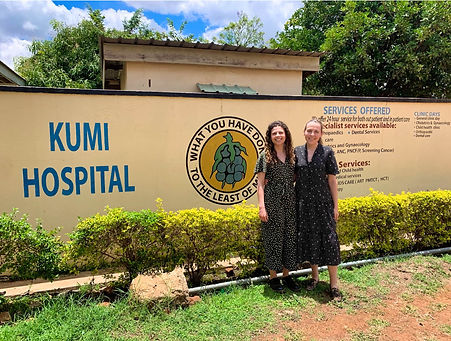
Our Education Exchange Programme (Ed Ex) provides important learning experiences for UK clinicians at all levels through short-term placements at Mildmay Hospital in Uganda. Senior clinicians share their expertise with local staff, while junior clinicians, including trainee GPs and medical students, gain valuable experience in a different clinical context.
Equality and diversity
Mildmay is committed to building and sustaining a diverse workforce. We welcome applications from people of all backgrounds, including those with lived experience of the conditions and circumstances affecting our patients. We believe this diversity strengthens the quality of our care.
